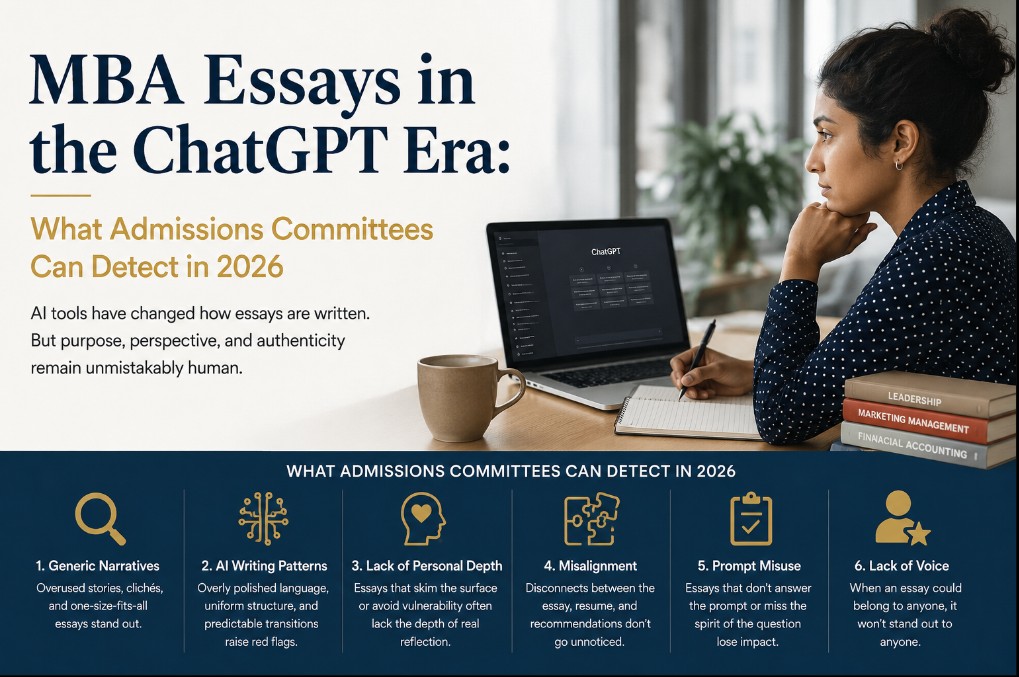
The growing use of ChatGPT and other AI tools has transformed the MBA admissions process. From brainstorming essay ideas to refining grammar, applicants now have access to powerful writing assistants. However, as the use of AI in MBA applications increases, business schools are becoming more skilled at identifying essays that lack authenticity.
Many applicants wonder whether admissions committees can detect AI-written MBA essays. The reality is that most schools are not simply running applications through AI detection software. Instead, they focus on something far more important: whether the essay genuinely reflects the applicant’s experiences, motivations, and personality.
Why MBA Essays Still Matter
Even in 2026, MBA essays remain one of the most important parts of the application process. Test scores, academic performance, and work experience provide valuable data, but essays help admissions committees understand the person behind those numbers.
Business schools use essays to evaluate leadership potential, career clarity, self-awareness, and communication skills. An essay that sounds generic or overly polished can make it difficult for admissions officers to connect with the applicant’s story.
As AI-generated content becomes more common, authentic storytelling is becoming an even bigger differentiator in MBA admissions.
What Admissions Committees Can Detect
The biggest misconception is that schools are only looking for signs of AI-generated text. In reality, they are looking for signs that the essay does not truly represent the applicant.
One of the most common red flags is a lack of specific examples. AI-generated essays often describe leadership, teamwork, or career growth in broad terms without providing detailed experiences. Strong MBA essays include real situations, measurable impact, and personal reflections that only the applicant can provide.
Another issue is consistency. Admissions officers compare essays with resumes, recommendation letters, application forms, and interviews. If an applicant presents deep insights and exceptional communication skills in written essays but struggles to discuss the same experiences during an interview, questions naturally arise.
Schools are also becoming more sensitive to generic “Why MBA?” and “Why This School?” responses. AI can summarize program features, but it cannot replace genuine research, conversations with alumni, or personal reasons for choosing a particular business school.
How to Use AI Responsibly in MBA Applications
AI is not the enemy of MBA applicants. In fact, many candidates use it effectively during the application process. The key is understanding where AI adds value and where it creates risk.
Applicants can use AI to organize ideas, improve readability, identify repetitive language, and brainstorm essay structures. However, relying on AI to write complete essays often results in content that lacks personality and emotional depth.
The most successful applicants use AI as an editing tool rather than a storytelling tool. Admissions committees want to hear your voice, not the voice of a language model.
The Future of MBA Essays
As AI becomes more integrated into everyday life, business schools are adapting their evaluation methods. Interviews, video essays, and behavioral assessments are playing a larger role in helping admissions teams assess authenticity.
What remains unchanged is the importance of self-reflection. The best MBA essays are not necessarily the most polished. They are the ones that clearly explain an applicant’s journey, challenges, aspirations, and growth.
Why Experienced MBA Consultants Still Matter in the AI Era
While AI can help applicants generate ideas and improve writing quality, it often struggles to uncover the personal insights that make an MBA application memorable. This is where an experienced MBA consultant using a traditional, candidate-focused approach can make a significant difference. Rather than relying on AI-generated prompts and generic responses, skilled consultants spend time understanding an applicant’s career journey, leadership experiences, achievements, setbacks, and long-term goals. Through structured discussions and multiple rounds of reflection, they help candidates identify stories that are authentic, unique, and aligned with what admissions committees are looking for. As MBA admissions teams become increasingly aware of AI-generated content, applications built through genuine self-reflection and personalized guidance are often more compelling than essays created primarily through automated tools. The strongest MBA essays in 2026 are not those written by AI, but those that communicate a candidate’s real experiences, values, and aspirations in a way that feels personal and credible.
Conclusion
The rise of AI in MBA applications has not reduced the importance of MBA essays. If anything, it has made authenticity more valuable than ever. In today’s competitive MBA admissions environment, applicants who use AI responsibly while preserving their personal voice will stand out.
A compelling MBA essay is not about perfect writing. It is about presenting a genuine story that admissions committees can trust, remember, and connect with long after they finish reading your application. Working with experienced MBA consultants who prioritize personal storytelling and self-reflection can further strengthen this process, helping applicants create essays that remain authentic in the ChatGPT era.